
Loft Conservation & Thermal Efficiency Services
Up to 25% of household warmth escapes through an unmanaged roof space. Our loft conservation service optimizes attic heat retention, seals severe draughts, and establishes balanced passive ventilation to eliminate winter condensation and lower heating bills.
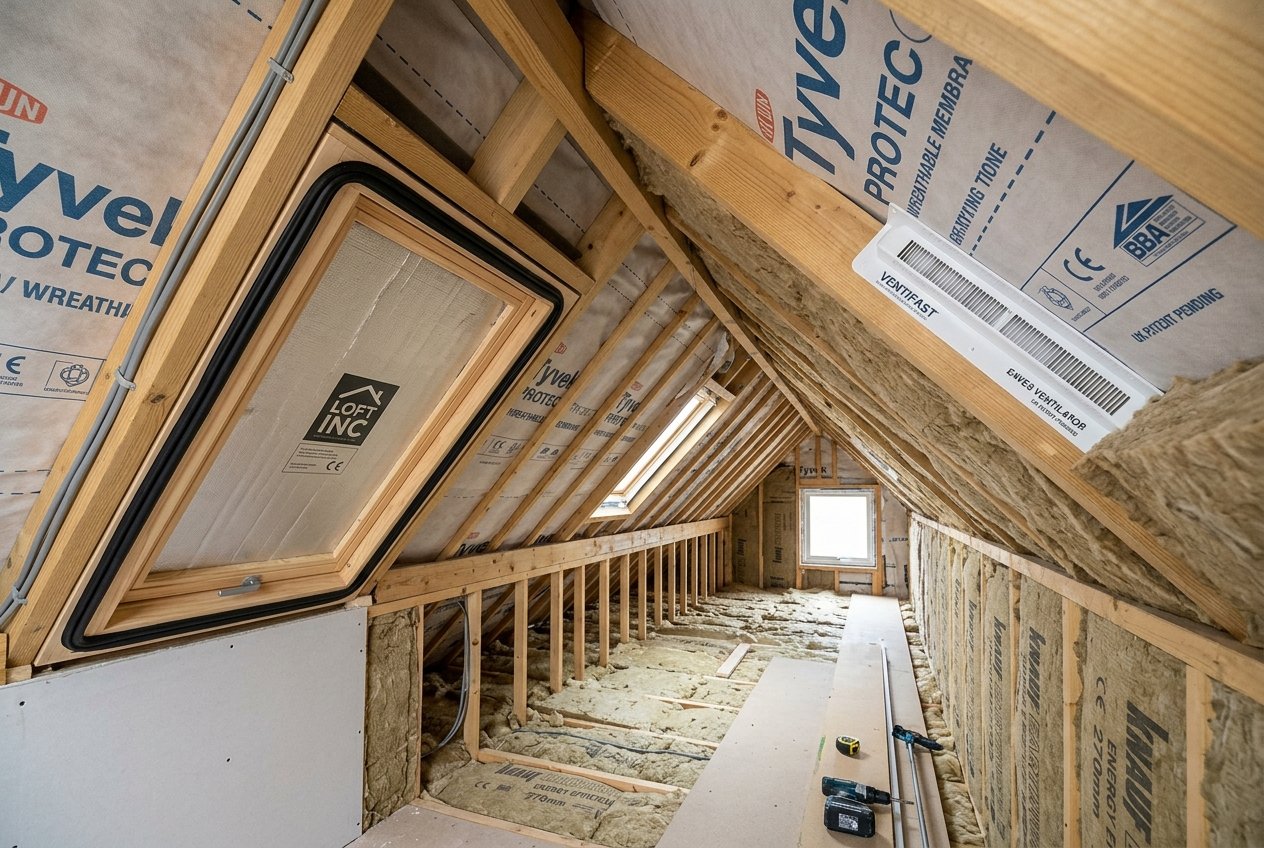
Balancing Heat Retention & Roof Space Airflow
A truly energy-efficient home requires more than simply rolling out insulation. When warm, moisture-laden air rises from living spaces into a cold attic, improper sealing allows vital heat to escape while trapped humidity condenses against cold roof timbers and non-breathable sarking felt. Over time, unmanaged interstitial condensation causes damp timbers, rot, and harmful black mould spores.
At Homecover Roofing Ltd, our Loft Conservation service addresses the entire thermal and atmospheric microclimate of your roof space. We eliminate air leakage paths, seal uninsulated ceiling penetrations, and integrate precision eaves and ridge ventilation. This preserves warmth in the rooms below while maintaining a dry, healthy, continuously ventilated attic structure.
Meticulously sealing ceiling penetrations, wiring chases, pipe boxes, and installing rubber-gasketed loft hatch seals.
Installing rigid eaves ventilator trays ensuring insulation never blocks the essential low-level soffit air paths.
Balancing cross-flow air changes compliant with BS 5250 to eradicate winter timber dampness and attic mould.
Optimizing the ceiling envelope to stop rising heat loss, contributing directly to lower monthly energy bills.
Our Structured Loft Conservation Process
Every property possesses unique airflow dynamics. We execute a thorough survey and methodical thermal conservation upgrade:
- Attic Thermal & Moisture Survey: We evaluate existing insulation depth, inspect rafters for signs of damp or mould, check underfelt condition, and measure passive airflow.
- Air Leakage & Penetration Sealing: We seal gaps around soil pipes, electrical conduits, downlight recesses, and perimeter ceiling junctions where warm humid air bypasses insulation.
- Insulated Airtight Loft Hatch: We fit modern draught-proofed, insulated drop-down hatch doors fitted with continuous compression perimeter gaskets.
- Eaves & Soffit Air Baffle Protection: We install rigid eaves vent trays between all rafters to keep ventilation paths permanently clear of insulation blockages.
- Tile & Ridge Ventilation Balancing: Where existing airflow is insufficient, we install discreet roof tile vents or dry ridge ventilation channels to maintain continuous cross-ventilation.
- Pipework & Cold Water Tank Frost Lagging: Ensuring water tanks and pipes are comprehensively lagged so attic temperatures stay controlled without risking frozen pipework.
- Final Air Distribution Verification: Comprehensive check confirming complete draught sealing at living level and unrestricted air movement above.
Before & After: Loft Timber & Vapour Conservation
Drag the slider horizontally to see how breathable insulation, damp mitigation, and timber preservation transformed a neglected roof void.
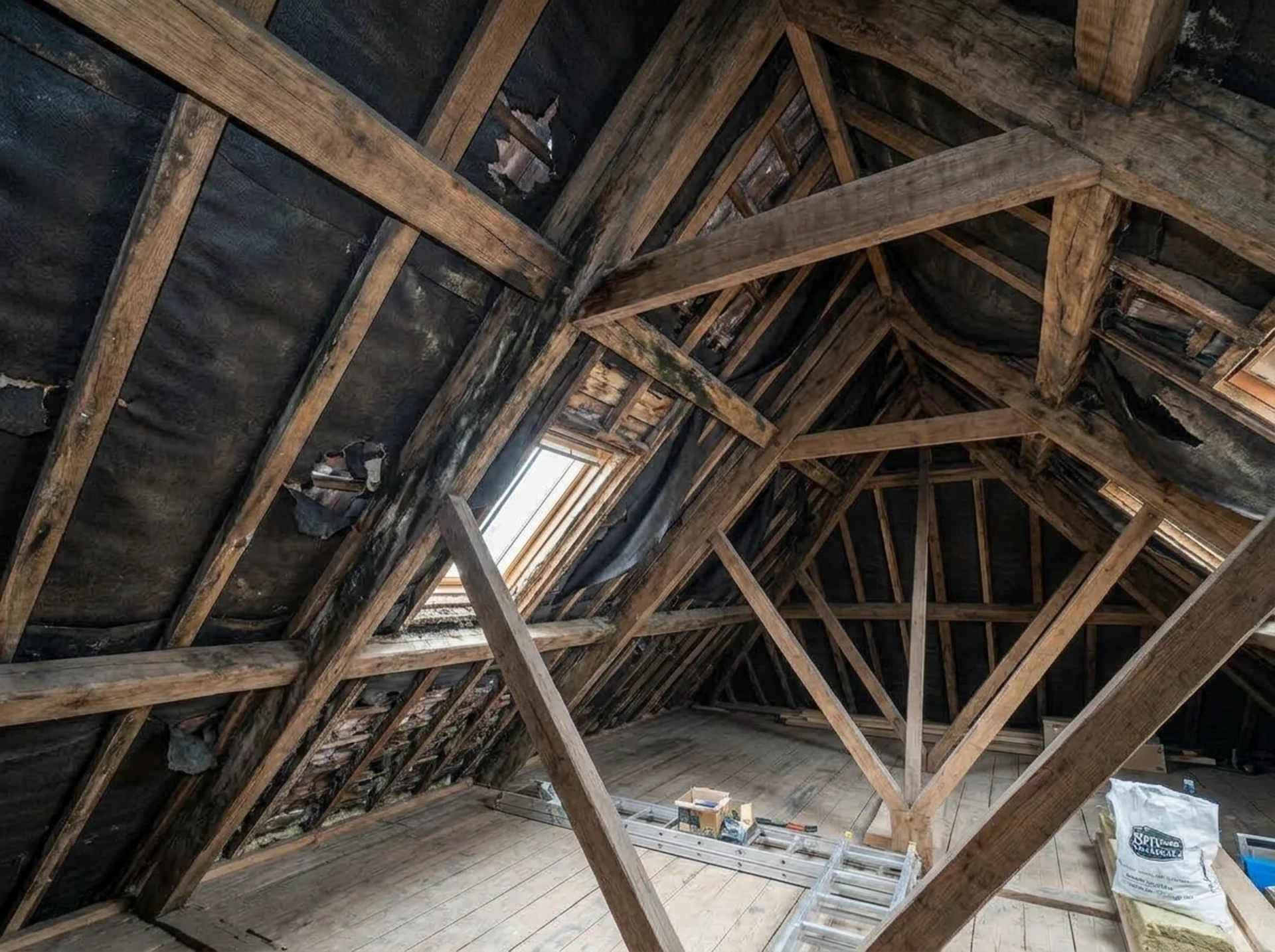 BEFORE
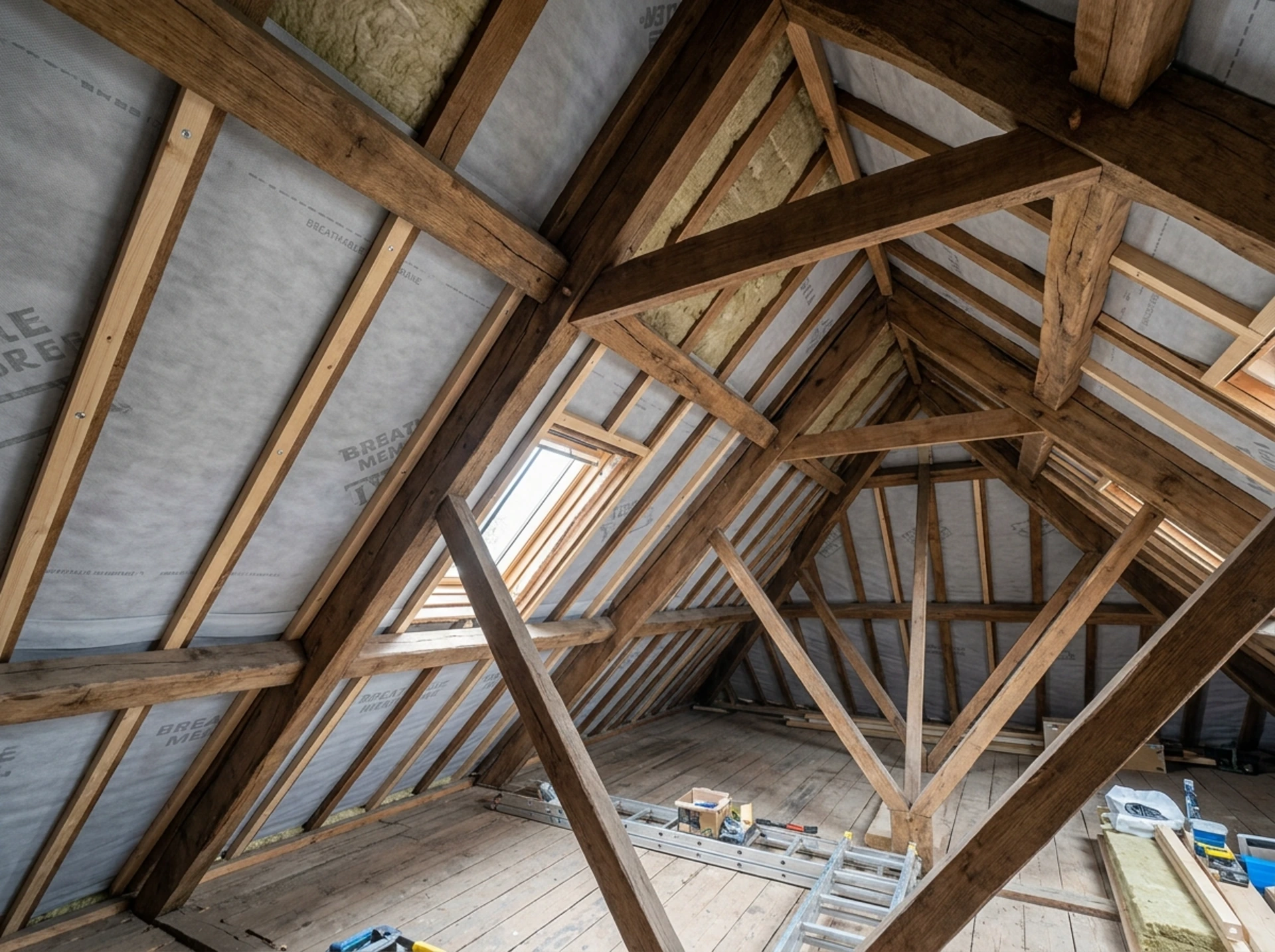 AFTER
Roof Space Conservation & Climate Control
Damp-affected attic treated with timber preservative, breathable membrane lining, and controlled airflow vents to preserve structural roof timbers.
Frequently Asked Questions
If you insulate a loft without adequate ventilation, humid air rising from baths, cooking, and everyday breathing becomes trapped in the cold roof space. The water vapour condenses on cold roofing timbers, leading to wood rot, crumbling battens, and hazardous mould growth. True loft conservation balances heavy insulation with controlled, continuous cross-flow airflow.
Attic condensation occurs when warm air from living quarters leaks through unsealed loft hatches and light fittings into the cold roof space. When it touches the freezing underside of the roof tiles or underfelt, it turns directly into water droplets. Our conservation service seals the thermal envelope to stop this moisture transfer at the source.
According to the Energy Saving Trust, uninsulated or poorly sealed roofs are responsible for up to a quarter of all residential heat loss. Combining draught-proofing, insulated access, and high-efficiency thermal barriers can save hundreds of pounds annually on heating expenses while noticeably boosting indoor comfort.
Yes. Mould requires sustained moisture and stagnant air to propagate. By eliminating warm humid air infiltration and installing guaranteed eaves-to-ridge cross ventilation, relative humidity levels are maintained within safe tolerances, permanently arresting fungal mould growth.